1958: The Year Wales Went to the World Cup
In the summer of 1958, a group of Welsh footballers travelled to Sweden and did something that would not be repeated for 64 years. They qualified for the World Cup. They got out of the group stage. They reached the quarter final of the biggest football tournament on the planet.
And they were knocked out by a goal from a 17 year old Brazilian who most of the world had never heard of.
His name was Pelé.
For Welsh football fans of a certain generation, 1958 is everything. It is the year that proved Wales belonged. The year that kept a dream alive through every hard decade that followed. The year that fathers told sons about, who told their own sons, until qualifying for a World Cup felt like both a birthright and an impossibility at the same time.
This is the story of that summer.
How Wales Got There
Wales did not qualify for the 1958 World Cup in the conventional sense. They were eliminated from the European qualifying group but were then given a second chance through an extraordinary set of circumstances.
FIFA had decided that the World Cup should include a representative from Asia and Africa. Every nation from those confederations had either withdrawn or been eliminated, leaving no representative. FIFA selected a European nation to play off against Israel for the remaining place. Wales were drawn out of the hat.
They beat Israel over two legs and were on their way to Sweden.
It was not the most straightforward path to a World Cup. Some critics at the time questioned the legitimacy of the qualification. The Welsh did not care. They were there.
The Squad

The 1958 Wales squad was built around some genuinely exceptional footballers. Players who, in another era, would have been household names across the world.
John Charles was the most famous. Juventus had paid a then world record fee to sign him from Leeds United the previous year. In Italy he was known as Il Gigante Buono, the Gentle Giant. He was a colossus of a player, equally devastating as a centre forward or a centre back, and he was the beating heart of the Welsh team.
Ivor Allchurch was another. A graceful, intelligent midfielder from Swansea who could unlock any defence. Jack Kelsey was one of the best goalkeepers in the world at the time, playing for Arsenal and respected across Europe. Cliff Jones was a flying winger with the kind of pace and directness that defenders dreaded.
These were not journeymen making up the numbers. This was a genuinely talented group of footballers who believed they could compete with anyone.
The Tournament
Wales were drawn in a group with Hungary, Mexico and the host nation Sweden. They drew all three group games, which was enough to take them into a play off for a place in the quarter finals. They beat Hungary in the play off and progressed.
John Charles was injured going into the quarter final against Brazil and was unable to play. It was a blow that the Welsh squad felt deeply. Charles had been their most dominant presence throughout the tournament and without him the team was measurably diminished.
Brazil were extraordinary. A young, fluid, devastating team built around players who would go on to define the sport for a generation. Garrincha. Didi. Vavá. And a teenage forward from Santos who had only just broken into the squad but was already doing things with a football that nobody had seen before.
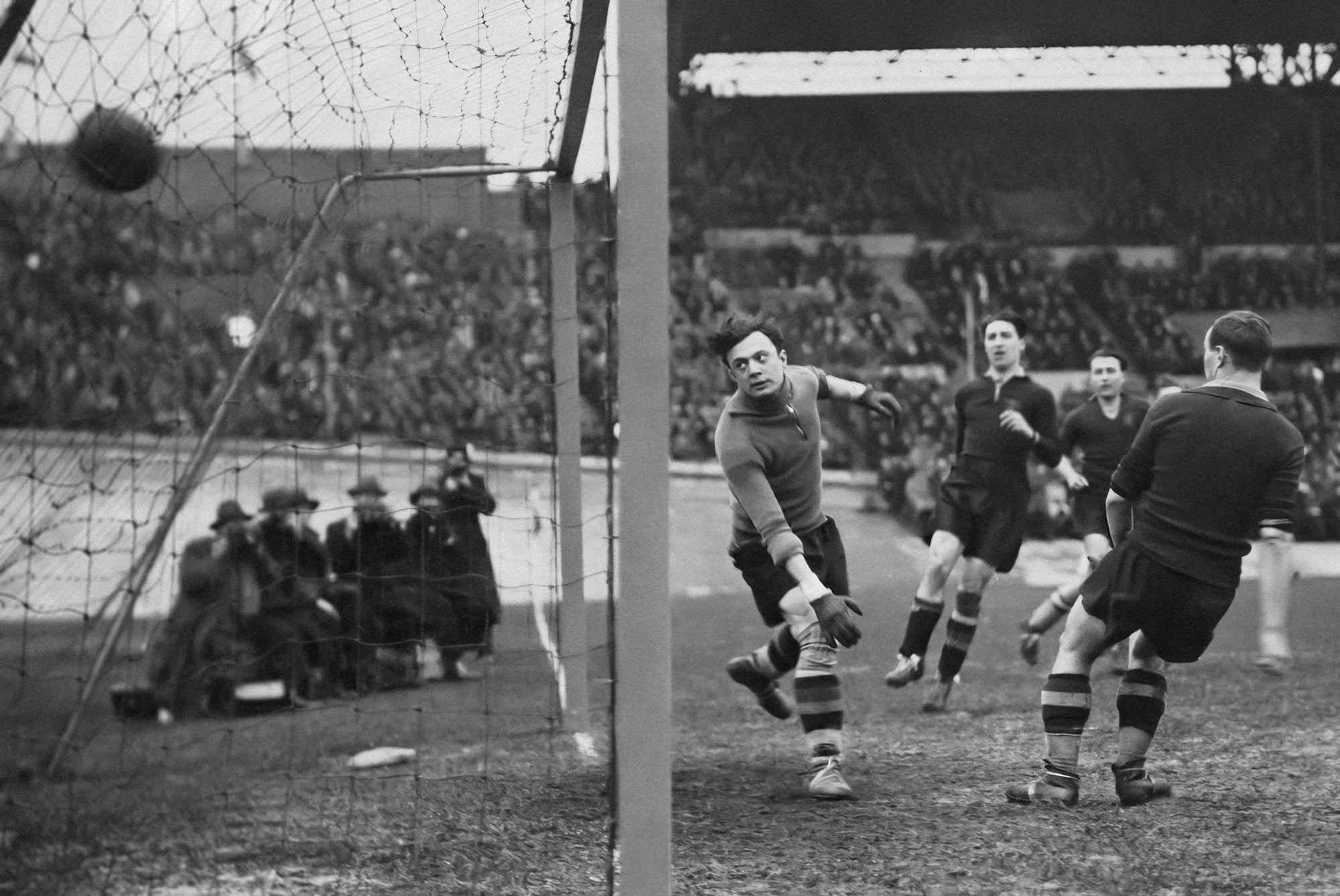
The game was tight. Wales defended well. Kelsey was magnificent in goal. For long periods it looked as though the Welsh might hold on and force extra time.
Then, with seventeen minutes remaining, Pelé received the ball with his back to goal, turned in a single movement and fired a shot into the net. It was his first World Cup goal. He was 17 years and 239 days old, the youngest goalscorer in World Cup history at the time.
Wales lost 1-0. They were out.
What It Meant
In the years that followed, 1958 became a touchstone for Welsh football. The high watermark. The proof that it was possible.
When Wales failed to qualify for tournament after tournament through the 1960s, 70s, 80s and 90s, 1958 was always there in the background. The reminder that Welsh football had once stood on the biggest stage and not disgraced itself. That the gap between Wales and the elite was not as vast as the qualifying record suggested.
Every Welsh football fan knows about 1958 even if they were not alive to see it. It is passed down like a family story. Told and retold until it becomes part of the fabric of what it means to follow Wales.
When Wales finally qualified for the 2022 World Cup in Qatar, ending that 64 year wait, the first thing most people thought about was 1958. The symmetry was impossible to ignore. A generation that had grown up hearing about Sweden finally had their own World Cup to go to. Our 1958 T-Shirt exists precisely because of that feeling — the weight of history worn with pride.
The Legacy
John Charles never played in another World Cup. Neither did Ivor Allchurch or Jack Kelsey. The 1958 squad was the peak of their international careers and they deserved more from it than a quarter final exit.
But what they gave Welsh football was something that could not be measured in results. They gave it a reference point. A moment of genuine achievement on the world stage that no subsequent failure could erase.
Wales went to the World Cup in 1958. They reached the quarter final. They were beaten by the greatest player who ever lived.
For 64 years that was the story. And even now, with Qatar 2022 in the memory, 1958 still sits at the heart of Welsh football history.
If you know, you know.
Carry the history. Explore our Welsh football clothing and gifts — original designs rooted in the moments that made Cymru.