
Traditional Welsh Clothing: What Did Welsh People Actually Wear?
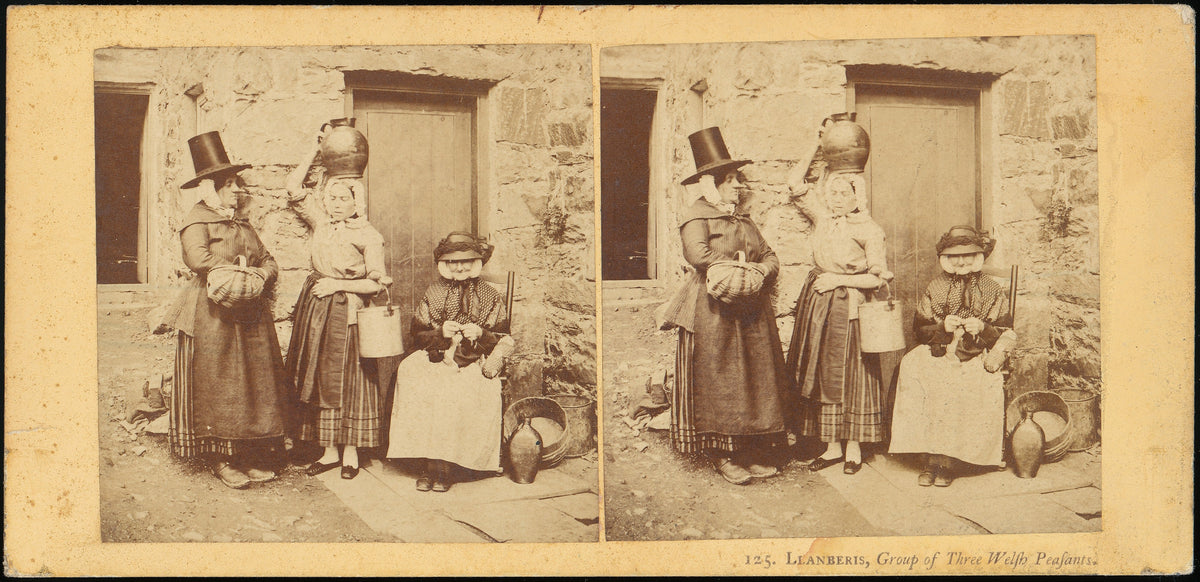
Ask somebody to picture traditional Welsh clothing and there is a good chance they will see the same thing: a tall black hat, a shawl, an apron and a long skirt. It is one of those images that has become inseparable from Wales, and every St David's Day children across the country still turn up to school wearing some version of it.
But the image is much neater than the history.
Welsh people did not all walk around dressed in one national uniform. What we now recognise as Welsh national dress grew from clothes people genuinely wore, particularly rural women in the nineteenth century, but also from regional differences, Welsh wool, changing fashions and a later desire to create something recognisably Welsh.
So what did Welsh people actually wear?
What is traditional Welsh clothing?
The costume we now think of as traditional Welsh clothing is based mainly on the everyday dress of Welsh countrywomen in the early nineteenth century. Museum collections show striped flannel petticoats worn beneath open-fronted bedgowns, together with aprons, shawls and a kerchief or cap. There was no single official outfit, and the details changed from one part of Wales to another.
That matters, because it is easy to look backwards and imagine everybody in Wales wearing the same red-and-black costume. They did not. Bedgowns could be loose and coat-like or more fitted, colours and patterns varied, and the clothes were practical garments before they ever became national symbols.
Wool was central to much of this clothing. Wales had a long woollen tradition, and surviving garments include striped and checked fabrics in colours far broader than the red that dominates modern versions of Welsh costume. The tidy image we know today came later.

The betgwn, pais and apron
One of the most important garments was the betgwn, or bedgown. Despite the English name, this was not something worn to bed. It was an outer garment worn over the pais, or petticoat, and surviving examples show just how much variation there was in cut, colour and pattern.
An apron was worn over the front, while shawls, kerchiefs and caps were common parts of the wider outfit. These were not costumes put on for a photograph. They grew out of everyday rural dress, worn by women working in homes, farms, markets and communities across Wales.
That is probably the most important distinction in the whole story. The clothes came first. Their meaning as a national costume came afterwards.
Why did Welsh women wear tall black hats?
The tall black Welsh hat, or het Gymreig, eventually became the part nobody could mistake. Its high crown and wide brim are now so closely associated with Wales that the hat can do most of the work of the entire costume on its own.
But the familiar chimney-shaped version was not timeless. Museum Wales dates its appearance to the late 1840s and describes it as developing from earlier forms of hat. Other styles were worn too, and there were regional variations. In some places the hat was taller; elsewhere different shapes made more sense for the work women were doing and the conditions they lived in.
By the nineteenth century, however, the black hat had become something more than practical headwear. It was becoming recognisably Welsh.
Did Welsh people really dress like this?
Yes, but not quite in the way the modern costume suggests.
The individual pieces were real. Rural Welsh women wore bedgowns, petticoats, aprons, shawls, kerchiefs and hats, and surviving garments and contemporary images prove that. What is misleading is the idea that one perfectly coordinated outfit was worn everywhere in Wales in exactly the same form.
National dress simplified something that had been much messier. Regional styles became one recognisable style. Everyday clothes became formal costume. Over time, one version of Welshness became easier to reproduce than all the different versions that had existed before it.
That does not make the costume fake. It makes it a symbol.
Did Lady Llanover invent Welsh national dress?
Lady Llanover is often placed at the centre of the story, and with good reason. Augusta Hall, Lady Llanover, was a strong supporter of Welsh language and culture and became influential in encouraging the wearing of an identifiable Welsh national dress during the nineteenth century.
But saying she simply invented Welsh costume gives her too much credit and the women who actually wore these clothes too little. The garments already existed. Welsh countrywomen had worn versions of them for years. Lady Llanover helped turn existing clothing traditions into something deliberately national, promoting Welsh dress at a time when questions about Welsh identity and the survival of Welsh culture mattered deeply.
That distinction is more interesting anyway. National identity was not created from nothing. It was built from things people already recognised as their own.
How tourism helped create the image
Once Wales had an outfit that looked unmistakably Welsh, the nineteenth-century tourist trade helped spread it. Artists produced prints for visitors, and later photographers produced huge numbers of images and postcards showing Welsh women in national dress.
The effect was powerful. The more often people saw the tall hat, shawl and apron together, the more that combination became the Welsh costume. Earlier regional differences became less visible, while the standard image became stronger.
It is not difficult to see why. A complicated identity is hard to put on a postcard. A tall black hat is easy.
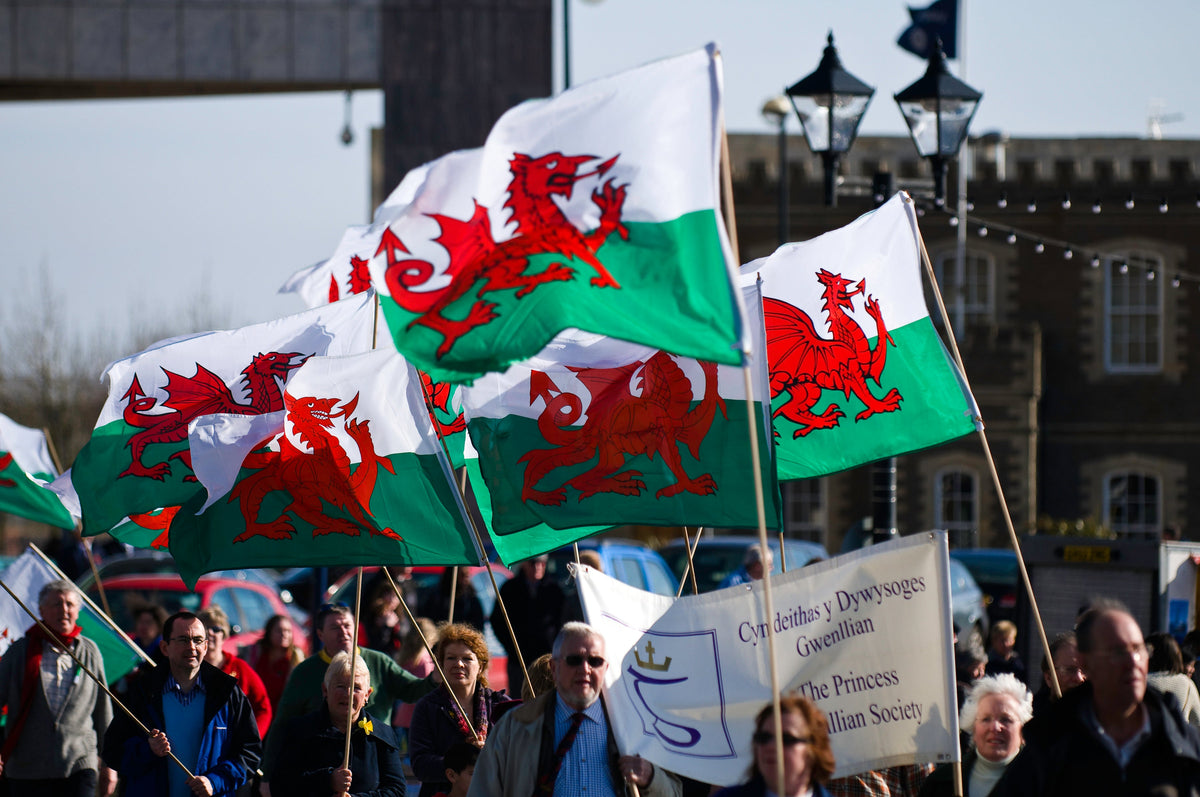
Wales has plenty of symbols that work in the same way. A dragon. A flag. A daffodil. A red shirt in a football crowd. They take something much larger and make it immediately recognisable.
What about the Welsh shawl?
The shawl became another familiar part of Welsh national dress, although its history is a reminder that national traditions rarely develop in isolation. Paisley-patterned shawls became fashionable in Britain during the nineteenth century, and the pattern itself had origins far beyond Wales. Home-produced checked woollen shawls were also worn.
There was, however, a particularly Welsh use for the shawl. Women used lengths of cloth and later shawls to carry babies, wrapping them securely against the body. Museum Wales records the practice in illustrations going back to the late eighteenth century, and it survived long after shawls had fallen out of wider fashion.
Again, the interesting part is the difference between fashion and use. Something did not need to originate in Wales to become part of Welsh life.
What did Welsh men traditionally wear?
The familiar Welsh national costume is overwhelmingly based on women's rural clothing. There is no male equivalent with the same standardised hat, coat and trousers that became a national image in the same way.
Welsh men obviously had their own working clothes and regional fashions, but what they wore depended more on period, occupation and class. A quarryman, farmer, ironworker and chapel-goer were not dressing for the same job, and the idea of a single male Welsh costume never acquired the cultural force of the women's dress.
That is why the image that survived is the Welsh woman in the tall hat. She became shorthand for the country.
Why is Welsh costume still worn on St David's Day?
By the twentieth century, national dress was no longer ordinary everyday clothing. But it had acquired a second life as a statement of Welshness, particularly on St David's Day, at cultural events and in tourism.
That is why children still wear versions of it today. Nobody thinks they are recreating an ordinary Tuesday in 1850. They are wearing something that has become recognisably Welsh, in the same way a flag or a song can represent much more than the object itself.
The clothes survived because their purpose changed.
Welsh clothing never stopped changing
This is the part I find most interesting. Traditional Welsh clothing was never as fixed as we sometimes imagine. Different parts of Wales dressed differently. Fashions changed. Old styles disappeared. Then parts of those old styles were deliberately preserved because people decided they meant something.
That process has not really stopped.
Very few people are going to walk through Cardiff or Caernarfon today wearing a betgwn and tall black hat. But people still use clothing to say something about where they come from. Sometimes it is a red shirt in a stadium. Sometimes it is a dragon. Sometimes it is one word: Cymru. Sometimes it is a year that only the right person understands.
That is the idea behind the modern Welsh clothing I am interested in. The clothes look completely different from the nineteenth-century garments kept in museum collections, but the instinct underneath them is familiar. People still want things that connect them to Wales without having to explain the connection to everybody else.
Welsh clothing has always carried more than fabric. What it carries has changed with the people wearing it.
You can see the modern version in our Welsh clothing collection.
For the ones that know.
Diolch,
Mike.
Sources and further reading
This article was fact-checked primarily against Amgueddfa Cymru – Museum Wales material on Welsh national dress, surviving garments and the history of the Welsh hat. The historical photograph is from the National Library of Wales photographic collection and is in the public domain.


Leave a comment
This site is protected by hCaptcha and the hCaptcha Privacy Policy and Terms of Service apply.