
Y Wladfa: The Welsh Settlement in Patagonia That Refused to Disappear
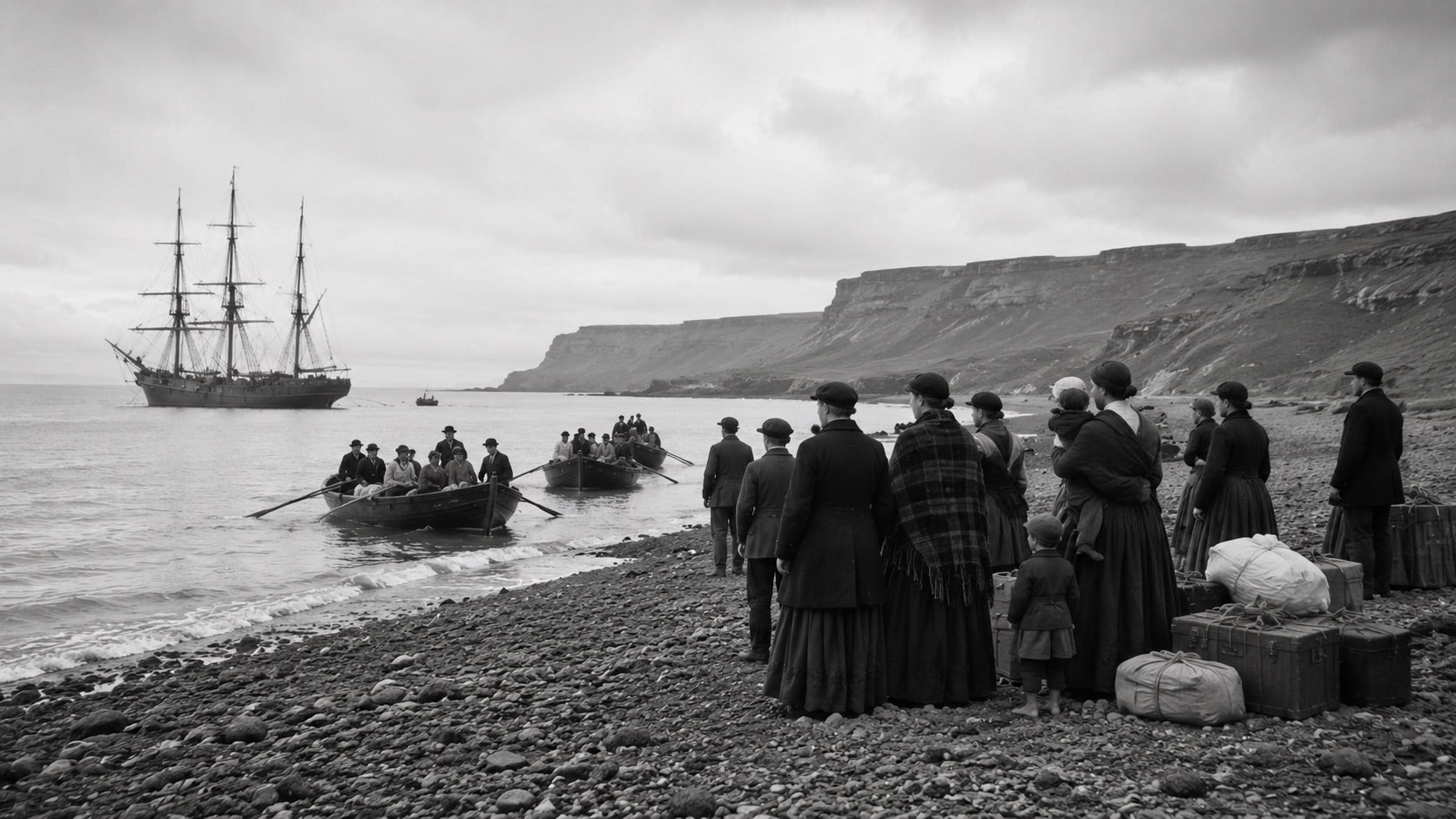
There is a town in southern Argentina where the street signs are in Welsh. Where chapels built by Welsh settlers still stand on the edge of the Patagonian steppe. Where, every 28 July, the community re-enacts the landing of the first Welsh boats on the shore of what is now Puerto Madryn.
The town is Gaiman. The settlement is Y Wladfa, which means simply "the colony". And the reason it exists at all is one of the more extraordinary stories in Welsh history.
Why did the Welsh go to Patagonia?
By the middle of the nineteenth century, Wales was under pressure in a way that felt, to the people living through it, like a slow erasure.
The Industrial Revolution had pulled hundreds of thousands of Welsh people into the coalfields and ironworks of the south. The Welsh language was losing ground. In schools, children were increasingly taught only in English, and some were punished for speaking Welsh at all. Welsh nonconformist religion, the backbone of community life for generations, was being squeezed by the Church of England. To a lot of Welsh people it felt as though their language and their identity were being quietly absorbed into England, and that nothing was being done to stop it.
Michael D. Jones had watched this happen before, in America. Born in Llanuwchllyn near Bala in 1822, Jones was principal of the Bala Independent College and one of the most prominent Welsh nationalists of his generation. He had spent time in Cincinnati in the 1840s and seen Welsh communities there dissolve into American life within a generation, their language gone. He came home convinced that the only answer was a Welsh settlement somewhere English was not the dominant force. Somewhere Wales could start again, on its own terms.
His phrase for it was "a new Wales beyond Wales". A little Wales, far enough from England to survive.
Why Patagonia
Several places were considered. Canada. Parts of the United States. In the end they chose Patagonia, in southern Argentina, for reasons that sound close to reckless in hindsight.
It was remote. It looked empty, at least from a distance. The Argentine government was willing to hand land to settlers who would populate a region it struggled to govern, and a deal was struck: the Welsh would receive land along the Chubut Valley, and in return they would become Argentine subjects.
In 1862, an advance party went to assess the land. Captain Love Jones-Parry and Lewis Jones were driven by a storm into a bay they named Porth Madryn, after Jones-Parry's estate back in Wales. The town that grew near where they landed is now Puerto Madryn. They came back with glowing reports. Those reports turned out to be a great deal more optimistic than the reality.
The Mimosa
The Mimosa, a converted tea-clipper, sailed from Liverpool on 28 May 1865 and reached Patagonia on 28 July. On board were 153 Welsh settlers, who had paid £12 an adult for the passage. Among them were miners, tailors, cobblers, carpenters and brickmakers. Very few were farmers, which became a problem almost at once.
What they found was not the green, fertile land they had been promised. It was arid, windswept semi-desert with no drinkable water and almost no food. The government had given them land. What the land gave them, at first, was close to nothing.
The early years were brutal. The first houses, built from earth, were washed away by a flash flood in 1865, along with the potato and maize crops. Food ran desperately short. Several mercy shipments of supplies were all that kept the colony alive through the first winters.
Two things saved them. The Tehuelche, the indigenous people of the region, taught the settlers how to hunt and how to live off the land. And Rachel Jenkins, one of the settler women, had the idea that changed everything: a network of irrigation canals drawing water from the Chubut River. The Welsh built Argentina's first irrigation system, the desert became farmland, and the colony finally found its feet.
What they built
Over the following decades, Y Wladfa grew. More settlers arrived from Wales, and from declining Welsh communities in Pennsylvania. Towns went up along the Chubut Valley. In 1891, Lewis Jones founded a Welsh-language newspaper, Y Drafod, to keep Welshness alive in the colony. A Welsh-medium school opened in 1868, decades before the first one in Wales itself.
The settlers named the land in Welsh. The Chubut River became Afon Camwy, the Welsh name used for the river that runs through the heart of the settlement. Towns were called Trelew, after Lewis Jones, and Gaiman, and Trevelin. The chapels they built still stand. The windmills they raised still turn.
Where are the Welsh towns in Patagonia?
The Welsh story in Patagonia is spread across several places rather than one single town. Puerto Madryn, on the Atlantic coast, is where the Mimosa settlers arrived in 1865. From there the colony developed inland along the Chubut Valley.
Rawson became one of the early settlements in the valley. Trelew grew around the railway and took its name from Lewis Jones. Gaiman became one of the places where Welsh culture remained most visible, with its chapels, tea houses and Welsh traditions. Further west, near the Andes, Trevelin became another important Welsh Patagonian community.
Together these places form the geography of Y Wladfa: Welsh names, stories and communities spread across a vast part of Chubut rather than contained in one little corner of Argentina.
By the end of the nineteenth century, around 4,000 people of Welsh descent were living in Chubut. Against long odds, the settlement had survived.
Why is Welsh still spoken in Patagonia?
Welsh survived in Patagonia because it was carried through families, chapels, schools and community life rather than being left as something belonging only to the first settlers. The language declined at points, particularly as Spanish became dominant, but it never disappeared.
That connection has been strengthened by Welsh teaching in Patagonia and continuing links with Wales. Welsh is taught in the region, including through bilingual education, while Eisteddfodau and other cultural traditions give the language somewhere to be used rather than simply remembered.
What remains
Y Wladfa did not disappear. It held on: through the fall in Welsh immigration after 1914, through Argentina's official policy of Spanish-language assimilation, through decades when contact with Wales was thin and the Welsh of the Chubut Valley quietly contracted.
Today there are around 50,000 Patagonians of Welsh descent, and Chubut is home to the largest Welsh-speaking community outside Britain. Estimates of active Welsh speakers sit at roughly 5,000, with the language taught in bilingual schools in Gaiman, Trelew and Trevelin. Since 1997, a British Council programme has sent Welsh teachers out to Patagonia every year.
In Gaiman there are tea houses serving bara brith. In Trelew there is a museum devoted to the history of the colony. And every October, Eisteddfod y Wladfa takes place: a festival of Welsh music, poetry and culture, held in Argentina, in Welsh, 7,000 miles from Wales.
Why it matters to this brand
Made in Cymru is built around Welsh identity. Not the idea of it. The real thing, rooted in real moments and real places.
Y Wladfa is one of those places. It is the story of people who refused to accept that their language and culture would simply be absorbed and forgotten. Who sailed to the far end of the world on a principle: that being Welsh was worth keeping, whatever it cost.
That instinct sits behind everything we make. The designs are not decorations. They are markers of an identity that has been carried, protected and handed on across centuries and continents. Y Wladfa is the most extreme expression of that instinct. It is also the same instinct.
Yma o hyd. Still here. The phrase was written in 1981, about Wales. It could just as easily have been written in 1865, by 153 people stepping off a ship onto a Patagonian shore with nothing but the determination to stay Welsh.
Diolch,
Mike.

The Yma O Hyd Hoodie.
The Yma O Hyd T-Shirt.
Home Wherever We Are.


Leave a comment
This site is protected by hCaptcha and the hCaptcha Privacy Policy and Terms of Service apply.