Cardiff Arms Park: More Than Just a Rugby Ground
There are places that exist on two levels simultaneously. The physical level — bricks and mortar and grass and steel — and the emotional level: the accumulated weight of everything that has happened there and everything that people have felt in its presence.
Cardiff Arms Park is one of those places.
To anyone outside Wales it is simply a rugby ground in the centre of Cardiff. To Welsh people it is something else entirely. A place of pilgrimage. A repository of memory. A piece of ground that carries within it the story of Welsh rugby, Welsh identity and what it means to be part of something bigger than yourself.
The History
The Arms Park has been a sporting venue since the 1840s, making it one of the oldest continuously used sports grounds in the world. Cricket was played there first. Athletics followed. Rugby arrived in the 1870s and never really left.
The Welsh Rugby Union took over the ground in the early twentieth century and began the process of developing it into an international stadium. By the mid twentieth century Cardiff Arms Park had become the home of Welsh rugby in a way that went far beyond a simple administrative arrangement.
It was where Wales played. That was enough.

The ground went through several significant redevelopments over the decades. The North Stand was rebuilt. The old Cardiff City Football Club stand was replaced. The pitch was moved and rotated. The capacity grew and shrank and grew again. But through all of it the Arms Park remained the Arms Park. The name itself had become bigger than any particular configuration of seats and stands.
The Atmosphere
Anyone who attended international matches at Cardiff Arms Park during its peak years in the 1960s, 70s and 80s will tell you the same thing. The atmosphere was unlike anything else in sport.
Part of this was architectural. The old Arms Park was enclosed in a way that trapped noise and amplified it. The roar of the crowd did not dissipate into the open air. It bounced off the stands and came back at you from every direction simultaneously. It was a physical experience as much as an auditory one.
Part of it was cultural. Welsh rugby crowds sing. Not just the national anthem, though Mae Hen Wlad Fy Nhadau sung by sixty thousand voices in Cardiff is one of the great sporting sounds in the world. Welsh crowds sing throughout matches — hymns and arias, folk songs, popular songs adapted with rugby words. The singing is spontaneous and communal and entirely natural in a way that visiting supporters from other countries find genuinely astonishing.
And part of it was history. By the time the great Welsh teams of the 1970s were playing at the Arms Park, the ground already carried decades of significant matches within its walls. Supporters who came to watch Gareth Edwards and Phil Bennett and JPR Williams were walking on the same ground where their fathers and grandfathers had watched Welsh rugby teams before them. That continuity meant something.
The Golden Era
Welsh rugby in the 1970s was the best in the world. Five Grand Slams in the decade. Three Lions tours dominated by Welsh players. A generation of talent that has never been matched before or since in Welsh rugby history.
Gareth Edwards is widely considered the greatest rugby player who ever lived. Phil Bennett was a magician with the ball in hand. JPR Williams was the most fearless full back of his generation. Gerald Davies was a winger of breathtaking pace and skill. Mervyn Davies was a number eight who controlled games with quiet authority. Ray Gravell brought an intensity that embodied everything Welsh rugby meant to the communities of the south Wales valleys that produced him.
These players did not just play rugby. They carried something with them onto the field. A sense of responsibility to the people in the stands, to the mining communities and steel towns and chapels and choirs that had made Welsh rugby what it was. When they pulled on the red jersey at Cardiff Arms Park they were representing something much larger than a sport.

The Arms Park was the stage for all of it. The Grand Slam clinchers. The victories over the All Blacks, rare and precious and celebrated for decades afterwards. The matches against England that carried an extra weight of history that both sets of supporters understood without it needing to be explained.
The Canton End
For Cardiff City football supporters the Arms Park era carries a different but equally significant set of associations. Before the club moved to Cardiff City Stadium, Ninian Park was home. And within Ninian Park, the Canton End was where the most passionate supporters gathered.
Named after the Canton district of Cardiff that borders the ground, the Canton End was the heartbeat of Cardiff City support for generations. Standing, singing, creating the kind of atmosphere that only a packed terrace behind a goal can generate.
Like the Arms Park itself, the Canton End was about more than football. It was a community. A place where people who had grown up together, worked together and followed the same team together stood shoulder to shoulder and expressed something that was difficult to put into words. Our Canton End T-Shirt is for everyone who was there, or who grew up hearing about it from someone who was.
The terrace is gone now, replaced by seating as all English and Welsh football grounds have been since the Taylor Report following Hillsborough. But the memory of what it felt like to stand there lives on in everyone who did.
The Millennium Stadium and After
Cardiff Arms Park as a full international rugby venue effectively ended with the opening of the Millennium Stadium in 1999, built on the adjacent site to host the Rugby World Cup. The new ground was bigger, more modern, more capable of hosting the major events that Welsh rugby needed to stage.
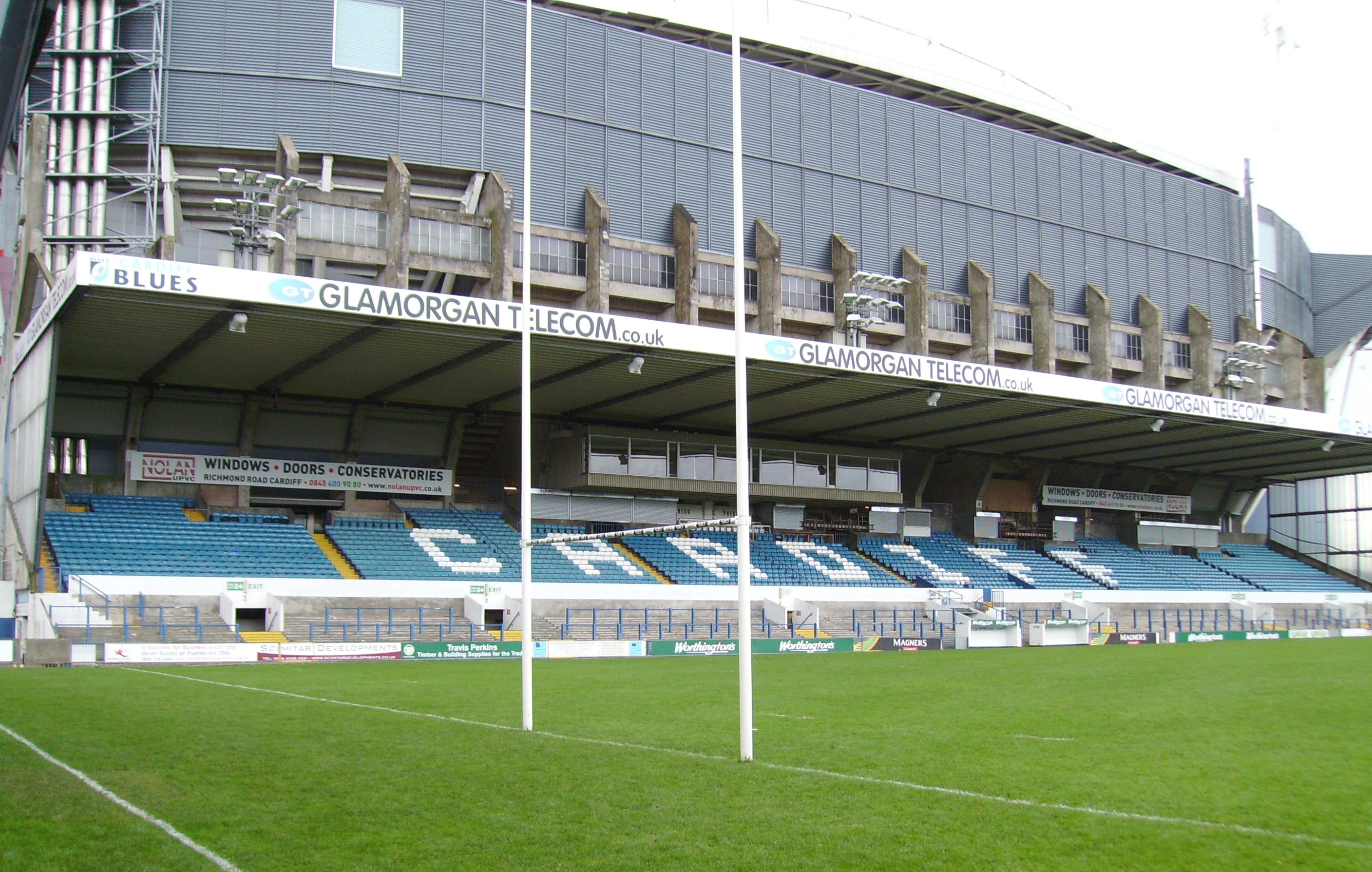
The old Arms Park did not disappear entirely. The Cardiff Blues and Cardiff RFC still play there. The ground remains in use. But the international matches moved to the Millennium Stadium — renamed the Principality Stadium in 2016 — and with them went the specific atmosphere that had made the old ground legendary.
There is hiraeth attached to that transition. A longing for something that existed in a particular place and time and cannot be fully recreated elsewhere, even in a bigger and better stadium.

The Principality Stadium has its own atmosphere and its own great moments. The roof closed against the noise of the outside world, the intensity amplified inside, creates something genuinely special. Welsh rugby supporters have made it their own.
But ask anyone who was at Cardiff Arms Park for a Wales v England match in 1978 and they will tell you it was different. That the particular combination of that ground, those players, those supporters and that era created something that cannot be manufactured or repeated.
Why It Endures
Cardiff Arms Park endures in Welsh sporting consciousness because it represents a time when Welsh rugby was the best in the world and the whole country knew it. When Saturday afternoons in winter meant gathering around a television or making the journey to Cardiff and being part of something that felt genuinely important.
It endures because the matches that were played there mattered. Not just as sporting results but as expressions of Welsh identity at a time when Wales was asserting itself in ways that went beyond sport. The devolution debate was building. The language movement was growing. Welsh culture was pushing back against decades of marginalisation.
The rugby team won Grand Slams. And the Arms Park was where it happened.
For everyone who was there, and for everyone who heard about it from someone who was, Cardiff Arms Park is not just a place. It is a feeling. A connection to a particular version of Wales that was proud and loud and extraordinarily good at rugby.
That feeling does not fade.
It just becomes hiraeth.
Welsh rugby and Welsh identity are inseparable. If either means something to you, our Rugby collection is built for people who understand that. From the Canton End T-Shirt to the Wales Rugby Metal Street Sign, explore the full range of Welsh gifts that carry the weight of what this country has achieved.